The Talking Stage Is a Trap — And You Both Built It Together

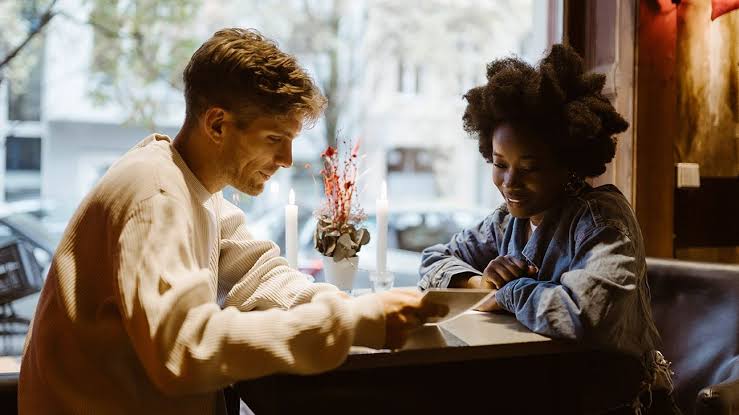
There is a very specific kind of disappointment that hits somewhere between the appetizers and the main course on a first date.
You've been texting this person for three weeks. Not casual, sparse texting — real texting. Morning messages, voice notes, late-night conversations about things that actually matter to you. Somewhere around day twelve you started looking forward to their name appearing on your screen. By week two you'd told your friends about them. By week three you were quietly, privately wondering if this might be something.
And then you meet them. In person. In real life. And within forty minutes you realize the person sitting across from you and the person you've been talking to are not, in any meaningful sense, the same human being.
Not because they lied. Not because they misrepresented themselves. Simply because a person built from text messages was always going to be different from a person built from flesh, timing, eye contact, nervous laughter, and the specific way they reach for their drink.
The talking stage created a relationship with a fiction. And now you're sitting across from the real version, doing quiet mental arithmetic about whether the gap is bridgeable.
Most of the time, it isn't. Not because the real person is worse. Just because the fictional one had a three-week head start.
How the Talking Stage Became the Default
It wasn't always like this. Ten years ago, app dating moved faster simply because the infrastructure didn't support extended asynchronous intimacy the way it does now. You matched, you texted briefly, you met. The date was where you figured out if there was something there.
Now the date is almost an afterthought — something that gets scheduled, rescheduled, and postponed while the main event happens in a text thread. The talking stage has become the audition, the interview, the first chapter, the proof of concept. The date, when it finally happens, is expected to confirm what the texting already established.
Which is a problem. Because texting establishes almost nothing real.
What texting establishes is whether someone is witty in writing, whether they share surface-level references with you, whether they can sustain a conversation through a medium that allows unlimited time to think, edit, and present the best possible version of a thought. These are not useless things to know. They're just not the things that determine whether two people have actual chemistry.
Chemistry is physical. It's proximity, body language, the speed at which someone processes what you say, the specific way a room feels when they're in it. You cannot text your way to that information. You cannot voice-note it. It only exists in person, and the only way to find it is to show up.
Why Both People Let It Go On Too Long
The talking stage persists for weeks not because either person is strategizing, but because both people are quietly afraid of the same thing: the date itself.
A date is risky. It requires showing up as a full human being without the buffer of a screen. It means silences that can't be filled by thinking for four minutes before responding. It means looking someone in the eye and knowing whether they're interested in what you're actually saying or just politely waiting to talk. It means accepting the possibility that the real version of this person won't match the imagined one — or worse, that you won't match theirs.
Texting delays all of that. Every day spent in the talking stage is another day where the possibility of chemistry hasn't been disproven yet. It's comfortable in the way that unopened letters are comfortable — as long as you don't read them, they could contain anything.
And so both people half-consciously extend it. One suggests a date in vague terms and waits. The other responds enthusiastically without nailing down specifics. The thread continues. More voice notes, more inside jokes, more late-night conversations that feel like intimacy but are actually just comfort.
Three weeks in, neither person wants to admit that the elaborate scaffolding they've built might not support a real structure.
The Specific Things Extended Texting Ruins
It burns through your best material. Every funny story, strong opinion, and revealing personal detail you share in a text thread is one fewer thing to discover in person. The date then feels like a live performance of a show both of you have already seen. There's nothing to uncover because you've already shown most of the cards.
It builds expectations the real person can't meet. The version of someone that exists in your phone at 11 PM is their most curated, most considered, most charming iteration. It's not fake — but it's edited in a way that no human being can sustain face to face for two hours. The real person will inevitably be slightly more awkward, slightly less articulate, slightly more human than the one you've been building in your head. That gap, even when it's small, tends to feel like disappointment.
It creates the wrong kind of investment. After three weeks of consistent texting, you've put real emotional energy into something. Which means you arrive at the date not as a curious person exploring a possibility, but as someone who has already half-committed to a specific outcome. That pressure warps everything — your body language, your willingness to sit with ambiguity, your ability to read the date honestly instead of through the lens of what you need it to be.
It sometimes replaces the relationship entirely. For certain people — particularly those with anxious attachment or social anxiety — the talking stage becomes the relationship. The actual date keeps getting postponed because the texting is satisfying enough to feel like connection without any of the vulnerability of physical presence. Months pass. No date ever happens. The connection quietly evaporates. Both people walk away confused about what that even was.
The Research Nobody Talks About
Studies on computer-mediated communication have consistently shown something counterintuitive: people who interact extensively online before meeting in person tend to report lower satisfaction with those eventual face-to-face meetings than people who met quickly.
The reason proposed by researchers is called the hyperpersonal effect. Online communication strips away the friction of physical presence — the nerves, the imperfect timing, the awkward pauses — and replaces it with an idealized, smoothed-out version of interaction. This produces a sense of intimacy that feels deeper than it actually is, because the normal obstacles that slow the development of real closeness have been removed.
When real-world meeting finally happens and those obstacles return, the experience feels like a downgrade even when the person is objectively fine. You're not comparing them to reality. You're comparing them to the hyperpersonal version, which was always going to win.
The solution isn't to lower expectations. It's to not build them on a medium that systematically inflates them.
The Actual Timeline That Works
Three to five days of texting before a first date. That's it.
Not because you need to play hard to get. Not as a tactical move. Simply because that's approximately how long it takes to establish baseline safety — that this person seems reasonable, has readable intentions, and is worth sixty to ninety minutes of your time in person. Everything beyond that is delay dressed up as building connection.
If someone keeps agreeing to meet while never actually committing to a specific time and place, that tells you something useful about how they handle low-stakes logistics. If the thought of moving from text to real life fills you with dread rather than anticipation, that's worth sitting with — because in person is where every relationship actually lives.
Ask early. Pick somewhere simple and low-pressure. Give it a real shot without the weight of three weeks of constructed expectation bearing down on a single evening.
If there's something real there, you'll feel it within the first twenty minutes. And if there isn't, you'll know that too — before you've spent a month building a relationship with someone who only fully existed in your phone.
How long was your longest talking stage before a first date — and how did the actual meeting compare to what you'd built up in your head? Drop your experience below.